
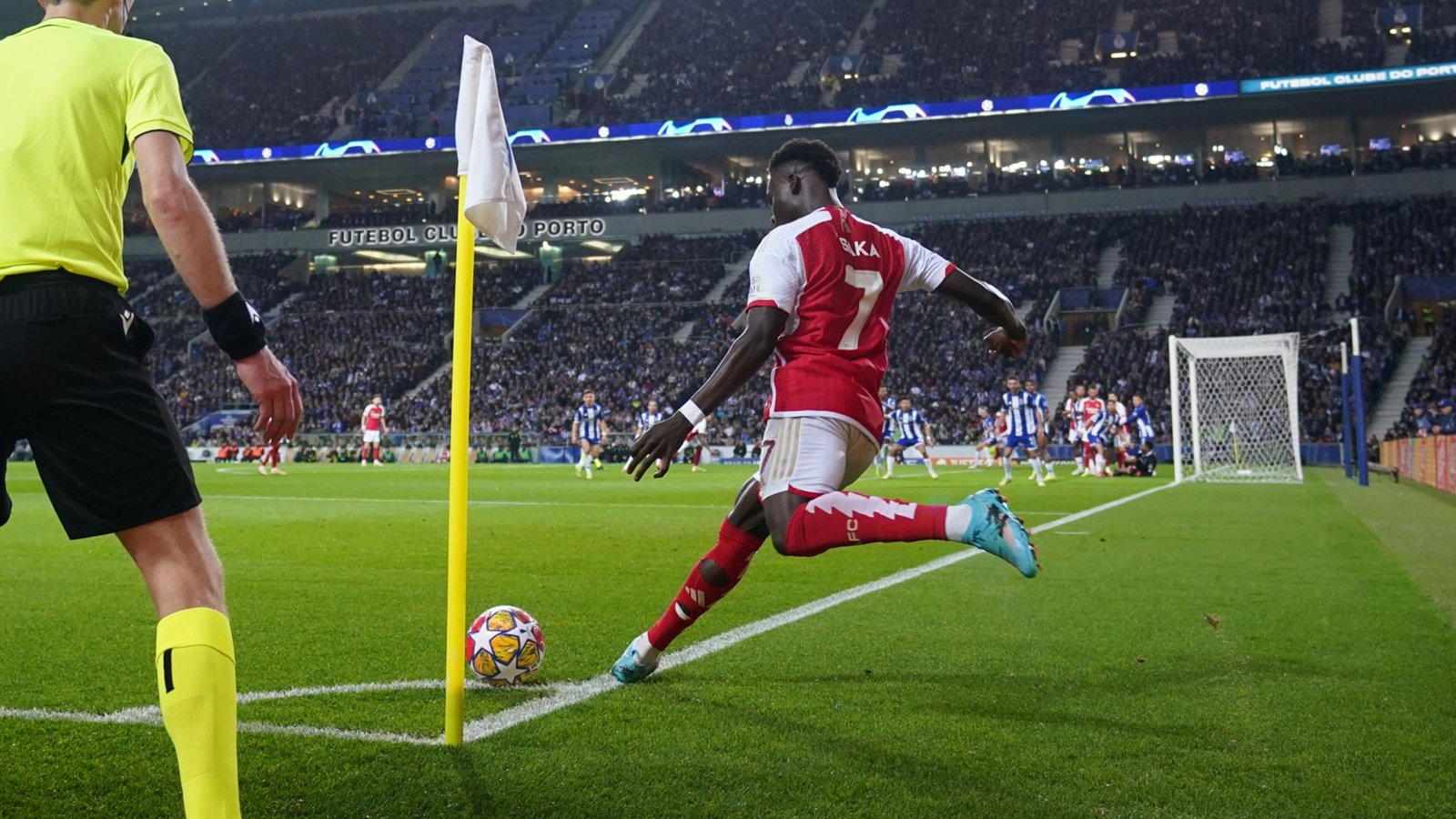
Why Arsenal Can’t Score From Corners: Full Content Pack
Arsenal won their first league title in 22 years without being the league’s flashiest attack. They won it with an exceptional defence, the deepest squad and a set-piece routine nobody could stop. Nineteen goals from corners was a Premier League record, and more than a quarter of their goals (26.8%) came that way, comfortably the highest share of any Premier League champion.
So it is strange to watch the title holders go seven league games in 2026-27 without a single corner goal. In all competitions, they have not scored from a non-penalty set piece at all. At the same point last season, they had already banked six corner goals in the league alone.
The analysis below is built on Opta Analyst’s breakdown of the problem. The short version: the drought is real, but it is not a crisis.
The threat has dropped, but not to zero
Goals can lie over seven games, so start with expected goals. Last season Arsenal led the league in corner xG with 13.8, which is 0.36 per game and 0.064 per corner. In plain terms, roughly one corner in sixteen should have produced a goal. They beat even that, scoring from 8.8% of their corners, the best rate in the league.
This season those numbers have slipped. They are creating 0.22 xG per game from corners and 0.047 per corner, a fall of 26.6% in chance quality. Per corner, they have gone from second in the league to ninth. Shots from corners are down too, from 2.8 per game to 2.1.
Corner threat | 2025-26 (full season) | 2026-27 (7 games) |
|---|---|---|
Goals from corners | 19 (league record) | 0 |
xG per corner | 0.064 | 0.047 |
xG from corners per game | 0.36 | 0.22 |
Shots from corners per game | 2.8 | 2.1 |
Crossed corners where Arsenal win first contact | 28.3% | 42.9% |
Open-play xG per game | 1.06 | 1.24 |
The drought is still unlucky, though. Arsenal have piled up 1.55 xG from corners, the seventh-highest total in the league. Only Liverpool have underperformed their corner xG by more (Liverpool -2.05, Arsenal -1.55). On the chances created, at least one goal was a fair expectation.
What has not changed: the routine
It would be easy to blame a tactical rethink. The data says otherwise. Arsenal still cross 84.9% of their corners (86.6% last season) and play 15.1% short, almost the same split as before. And they have gone even harder on the inswinger. Last season 96.3% of their crossed corners curled in toward goal. This season it is 100%.
Nor is the delivery missing its targets. An Arsenal player wins first contact on 42.9% of crossed corners, up from 28.3% and the second-best rate in the league. The ball is finding them. The problem is what happens next.
Three things that have changed
1. The people. William Saliba and Jurriën Timber have missed much of the campaign. Timber was the quiet star of last season’s routine: two corner goals, more than anyone else at the club, and seven headed first contacts, behind only Gabriel Magalhães with ten. Now Kai Havertz has the most first contacts from attacking corners with four. Gabriel has just one. Ben White, covering for Timber, has not touched a corner, though he is often there to block and disrupt. Ezri Konsa is not a natural aerial scorer, with two Premier League headed goals in his career.
2. The landing zone. Last season’s inswingers flooded the middle of the six-yard box and crowded the goalkeeper. This season the share of corners ending there is down 7.7%, while the share reaching the near post is up 7.8%. Some of that is the flat, hard delivery clipping the first defender. Some looks deliberate: Arsenal have used near-post flick-on routines against Chelsea, Leeds and Nottingham Forest (twice). The flick-on can be lethal, but it needs two good contacts instead of one.
3. The referees. Officials have been told to clamp down on holding, grappling and blocking at corners, and they are doing it. Defending teams are being awarded free kicks on 4.0% of corners, the highest rate in seven seasons. Only 20 of the 203 Premier League goals so far (9.8%) have come from corners, against 188 of 1,045 (18.0%) last season. The share has nearly halved across the whole league. Arsenal have been penalised just once for an attacking foul at a corner, and seven teams have conceded more. But the numbers cannot show what players no longer do, and there is visibly less of the goalkeeper-crowding that defined Arsenal’s routine.
The trade: fewer corner goals, better open play
Here is the part that matters most. Arsenal have won all but one of their league games and sit three points off the top, still among the title favourites. They are creating better chances in open play, 1.24 xG per game against 1.06 last season, an increase of about 17%.
They have also quietly dropped another dead-ball weapon. Last season they put 1.5 long throws per game into the opposition box. This season they have attempted two across seven league games. For a team that was criticised for leaning too hard on set pieces, shifting weight to open play is a defensible trade.
Verdict: should Arsenal worry?
Not yet. The corner threat is lower, the near-post experiment is hit-and-miss, and the referees have changed the rules of the fight. But the underlying numbers say a goal is overdue, the drought is part of a league-wide trend, and the open-play improvement is real. If Timber and Saliba return and the new routines click, the rest of the league may face a title holder with two ways to hurt them instead of one.
2. Quick-read blog (about 300 words)
Headline: Arsenal Have Scored Zero Corner Goals. Here’s Why It Doesn’t Matter (Yet)
Last season Arsenal broke the Premier League record with 19 goals from corners. This season, seven league games in, the count is zero. At the same stage last year it was six.
The drop is real. Arsenal’s xG per corner has fallen from 0.064 to 0.047, and they have slid from second in the league to ninth. But the routine is not the problem. They still cross 84.9% of their corners, and every single crossed corner this season has been an inswinger. Arsenal players are even winning first contact more often (42.9%, up from 28.3%).
What has changed is who is attacking the ball and where it lands. With Saliba and Timber missing for much of the campaign, the headers are falling to Havertz (four first contacts) and others who are not natural corner threats. More deliveries are ending at the near post, down 7.7% in the central six-yard box. And referees are cracking down on grappling, so defending teams are winning free kicks on 4.0% of corners, the highest rate in seven seasons.
Here is the twist: Arsenal are barely suffering. They have won all but one league game, and their open-play xG has climbed from 1.06 to 1.24 per game, about 17% better than last season.
Bottom line: they have created 1.55 xG from corners without scoring, so a goal is overdue. When it arrives, the champions will have a second weapon to go with the first.
Analysis based on Opta Analyst’s reporting.